

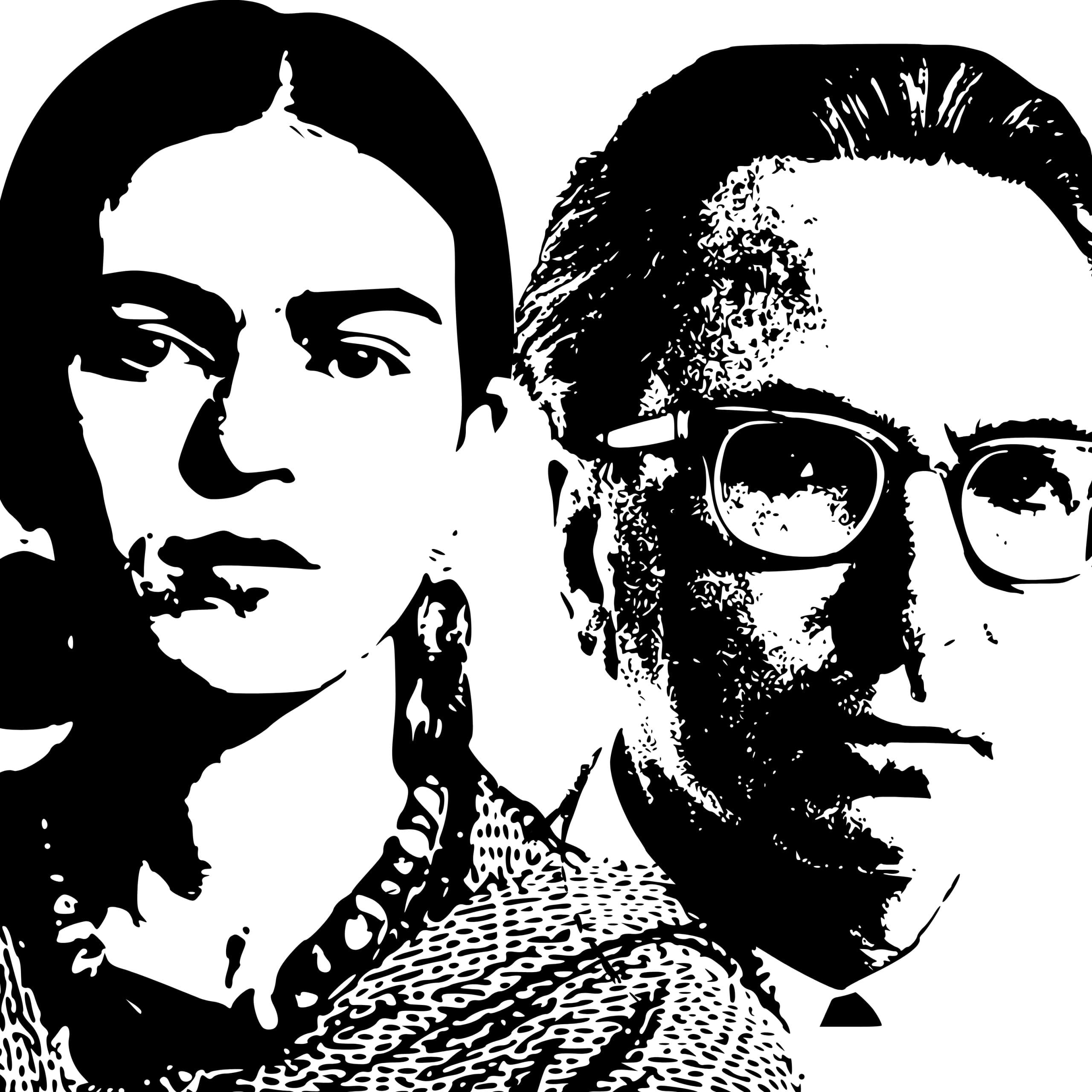
Frida Kahlo & Victor Frankl – I TRANSFORM PAIN INTO PURPOSE

They had every reason to surrender.
Instead, Frida Kahlo and Viktor Frankl forged meaning from the very pain that threatened to consume them. Both faced unimaginable anguish and emerged not as victims, but as guides who illuminated the path from darkness to purpose.

Frida Kahlo: The Alchemy Of Agony
Frida Kahlo’s story is one of radical transmutation. At eighteen, a devastating bus accident left her with a broken spinal column, shattered pelvis, and a lifetime of chronic pain. An iron handrail impaled her through her pelvis. An injury she described as piercing “the way a sword pierces a bull.” She could have easily been consumed by her circumstances. Instead, confined to bed for months, she chose to wield her brush as both weapon and balm.
What makes Frida extraordinary is her refusal to look away from her own wounds. Her parents mounted a mirror above her bed, and with her own reflection as her only subject, she began a process of self-exploration that would revolutionize self-portraiture. She endured more than thirty surgeries throughout her life, yet continued creating until the end. Through her unflinching gaze, she taught us that our deepest wounds can become our most authentic voice and that there is strange beauty in allowing others to witness our brokenness.
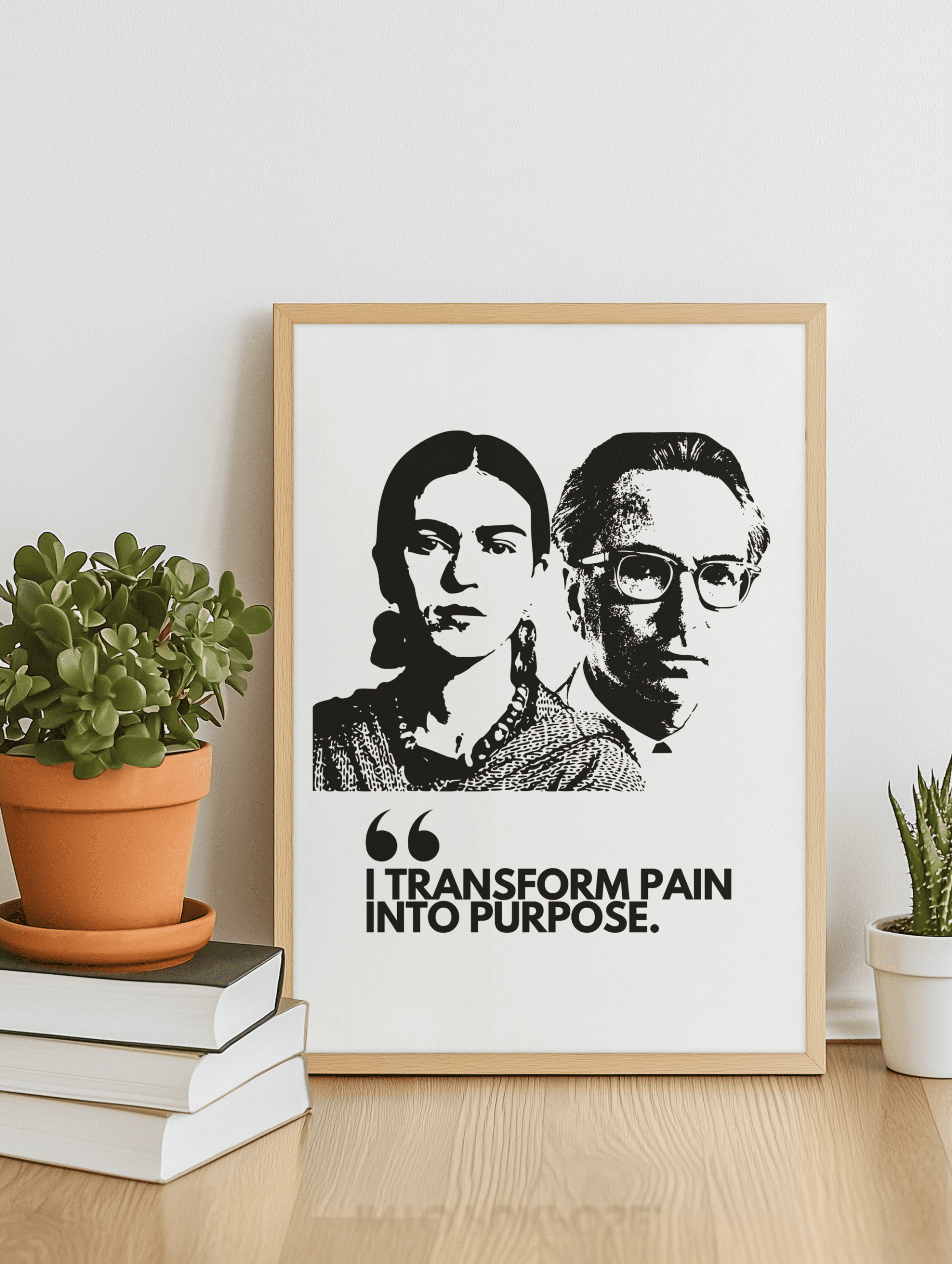
I TRANSFORM PAIN INTO PURPOSE | Frida Kahlo & Viktor Frankl
fine art archival prints
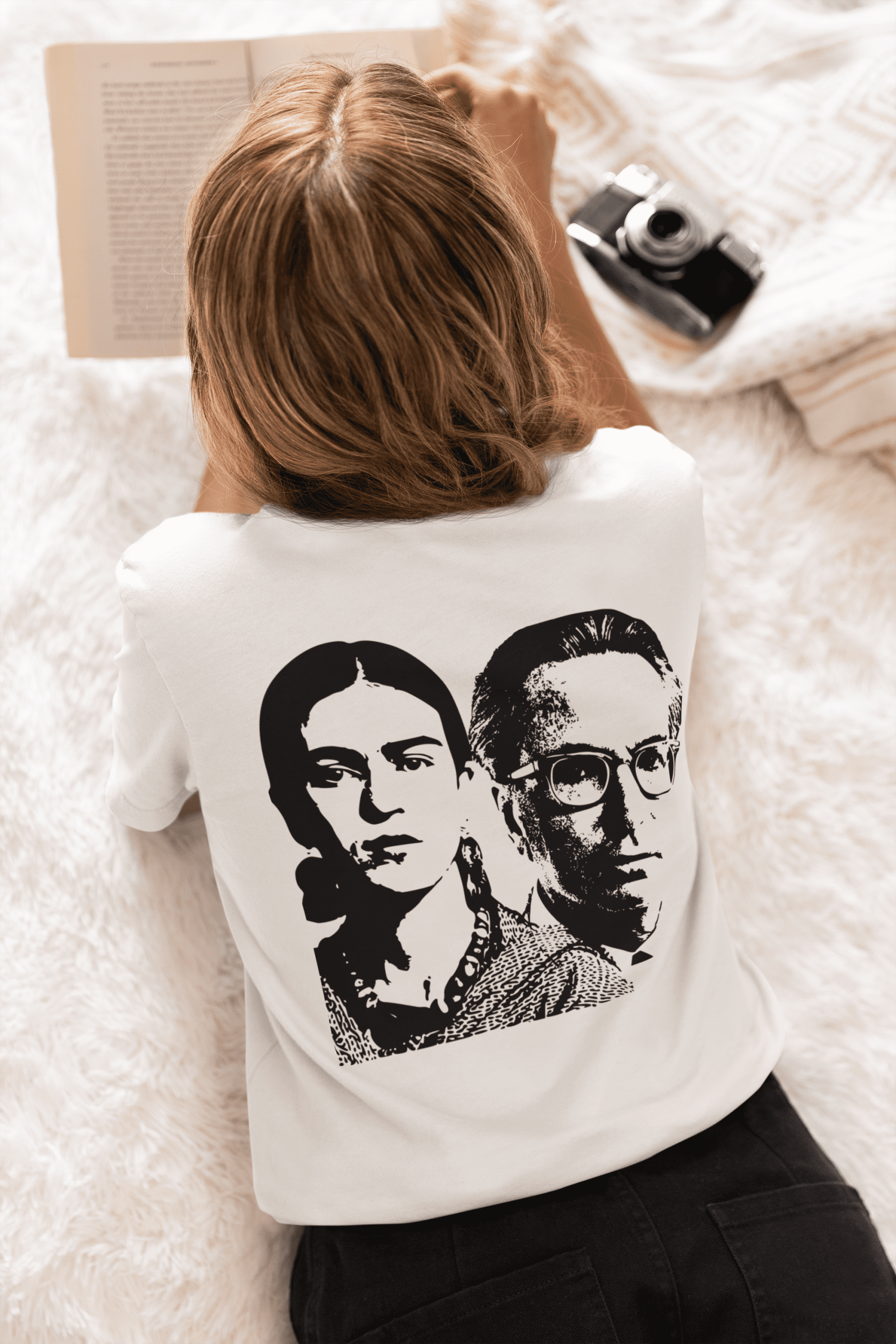
I TRANSFORM PAIN INTO PURPOSE | Frida Kahlo & Viktor Frankl
t-shirts
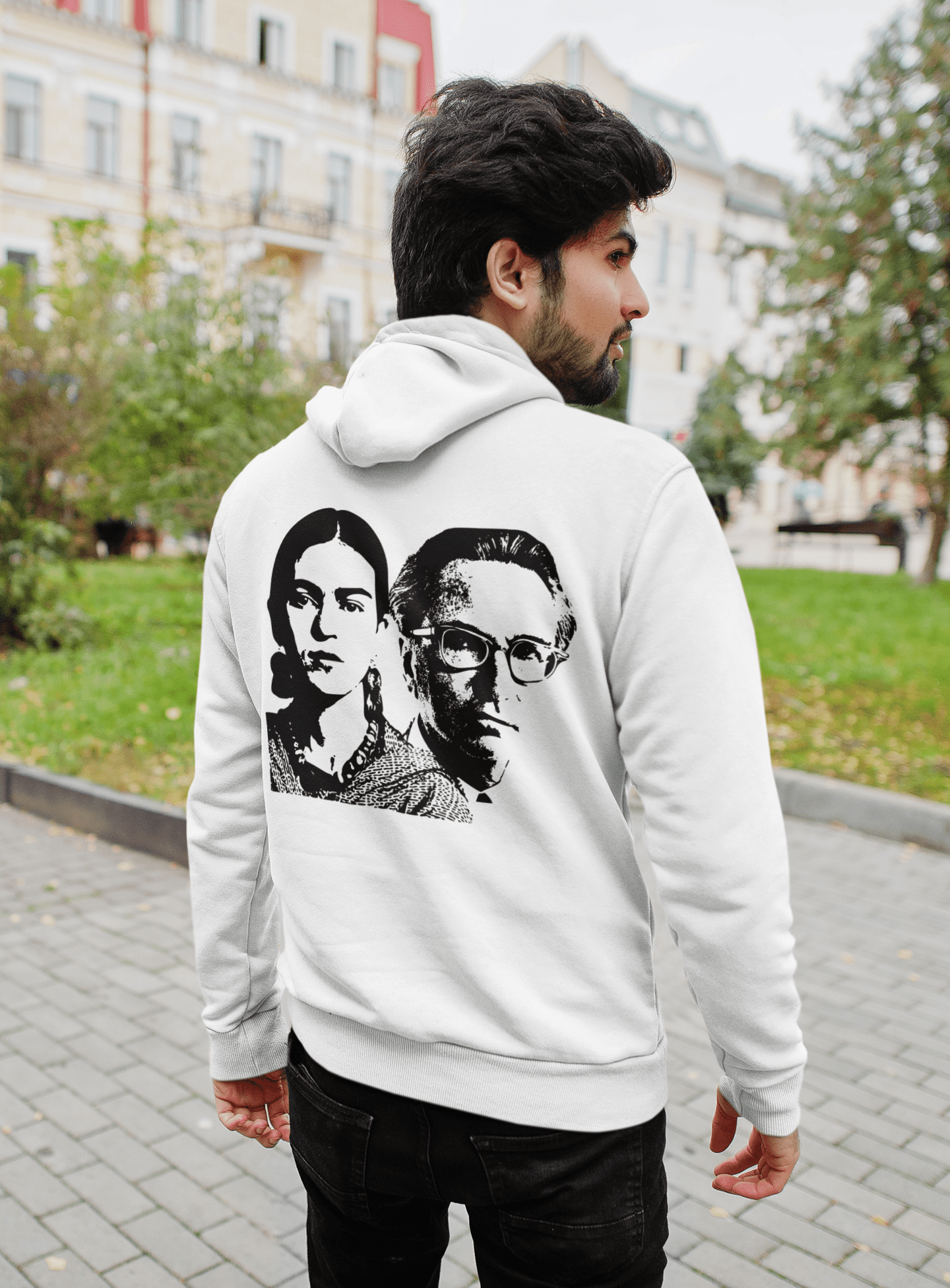
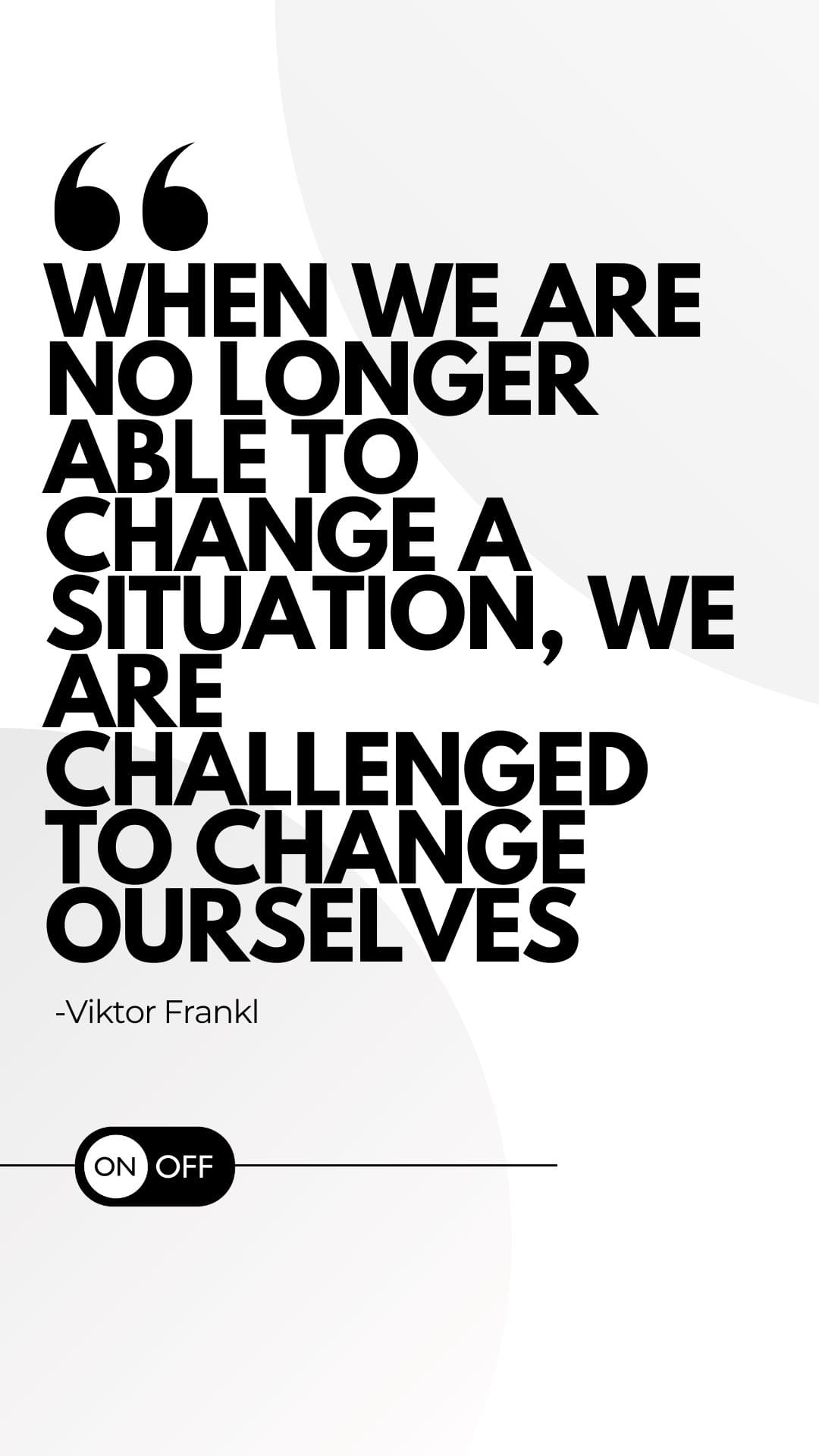
I TRANSFORM PAIN INTO PURPOSE | Frida Kahlo & Viktor Frankl
hoodie
Viktor Frankl: The Philosopher of Meaning
Viktor Frankl’s legacy emerges from the darkest chapter of human history. Over nearly three years in Nazi concentration camps, he lost his wife, his parents, his brother, and the manuscript containing his life’s work. Yet within that abyss, he discovered something that would transform millions of lives: among his fellow prisoners, it was not the physically strongest who survived, but those who maintained a sense of purpose.
What makes Frankl’s story compelling is his insistence that meaning can be found even in suffering. From his observations, he developed logotherapy, a therapeutic approach proposing that we are driven not by pleasure or power, but by meaning. He identified three pathways to purpose: through what we create, through what we experience and whom we love, and through the attitude we choose toward unavoidable suffering. This final pathway, what he called “the last of the human freedoms,” proved that even when stripped of everything, we retain the power to choose our response. His book Man’s Search for Meaning has since sold over sixteen million copies and remains a beacon for those seeking light in darkness.
Conclusion
Frida Kahlo and Viktor Frankl remind us that pain is not merely an obstacle to be overcome, but a teacher to be heard. Their lives reflect a philosophical truth: our deepest wounds often become the wellspring of our greatest contributions.
By refusing to let suffering have the final word, they transformed personal anguish into universal wisdom.
So, as we encounter our own moments of darkness, may we remember that purpose often waits on the other side of pain and that in this sacred transformation, our most broken places might become the source of our most profound light.
References
- Biography.com. “How a Horrific Bus Accident Changed Frida Kahlo’s Life.”
- History.com. “How a Devastating Accident Changed Frida Kahlo’s Life and Inspired Her Art.”
- Britannica. “Frida Kahlo.”
- Britannica. “Viktor Frankl.”
- Wikipedia. “Man’s Search for Meaning.”
- Wikipedia. “Logotherapy.”
- The Viktor E. Frankl Institute of America. “Viktor E. Frankl and Logotherapy.”
- Viktor Frankl Institute Vienna. “Viktor E. Frankl.”
Thought Threads
Oprah Winfrey & John Lennon I I BALANCE MY PASSION WITH MY RESPONSIBILITIES
In the tapestry of life, the threads of passion and responsibility are often...